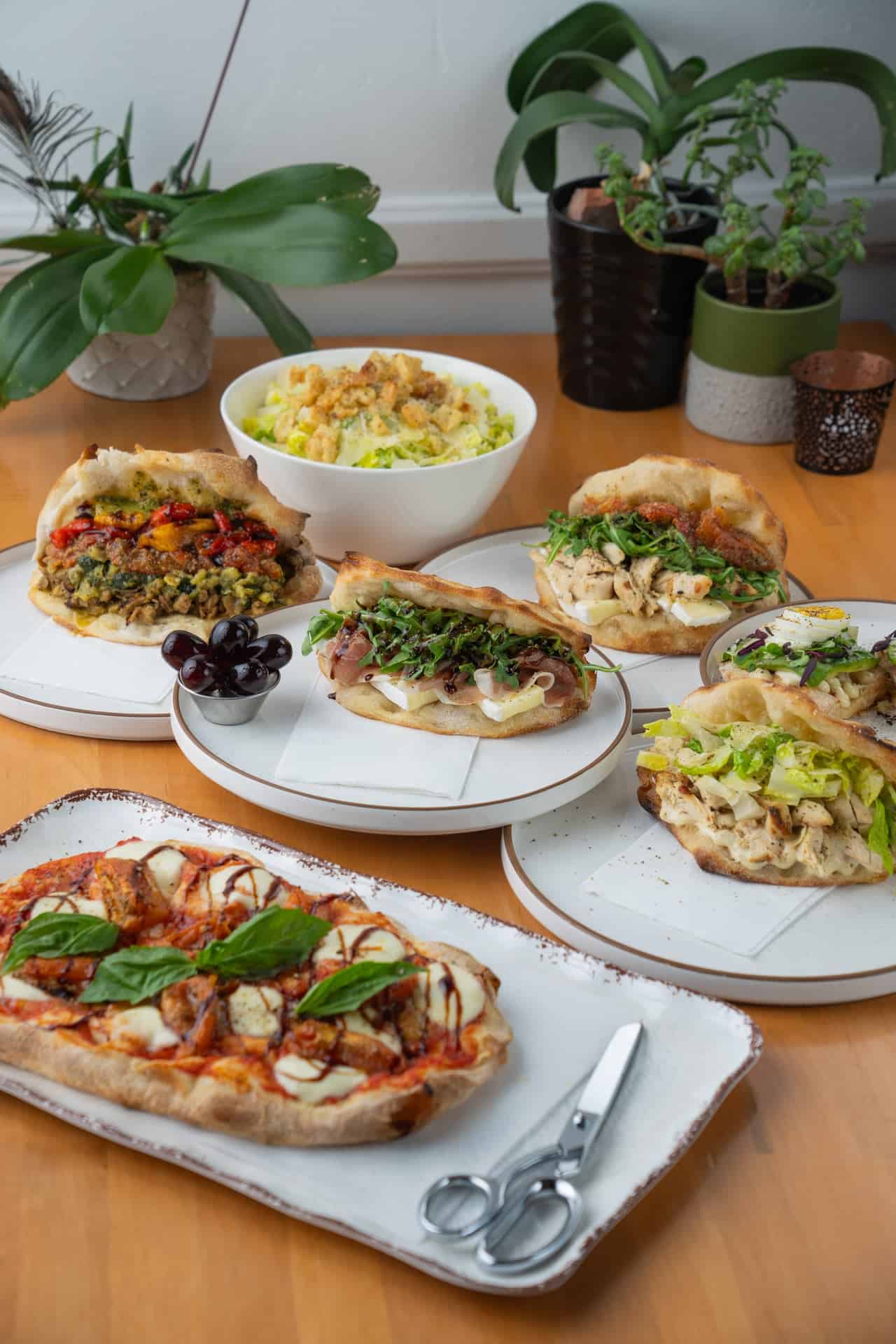
There are two ways to cook Italian food in America. You can preserve it under glass, exactly as your grandmother made it, and hope people still want that. Or you can keep what made it good and let everything else move.
We do the second one.
The flavours here are classic — the ones the Zacchino family brought from Sicily and Liguria, and the Roman technique we chose deliberately. The approach is contemporary: lighter, cleaner, built for people who care what goes into their bodies and still want to eat something that tastes like it came from somewhere. It’s the same idea as the room you’re sitting in. Classic concepts, contemporary feel, nothing fussy.
72 hrs Cold fermentation
4 Ingredients
85% Hydration
608°F Stone bake temperature
Seventy-Two Hours
The single biggest difference between our food and most Italian food in America is time.
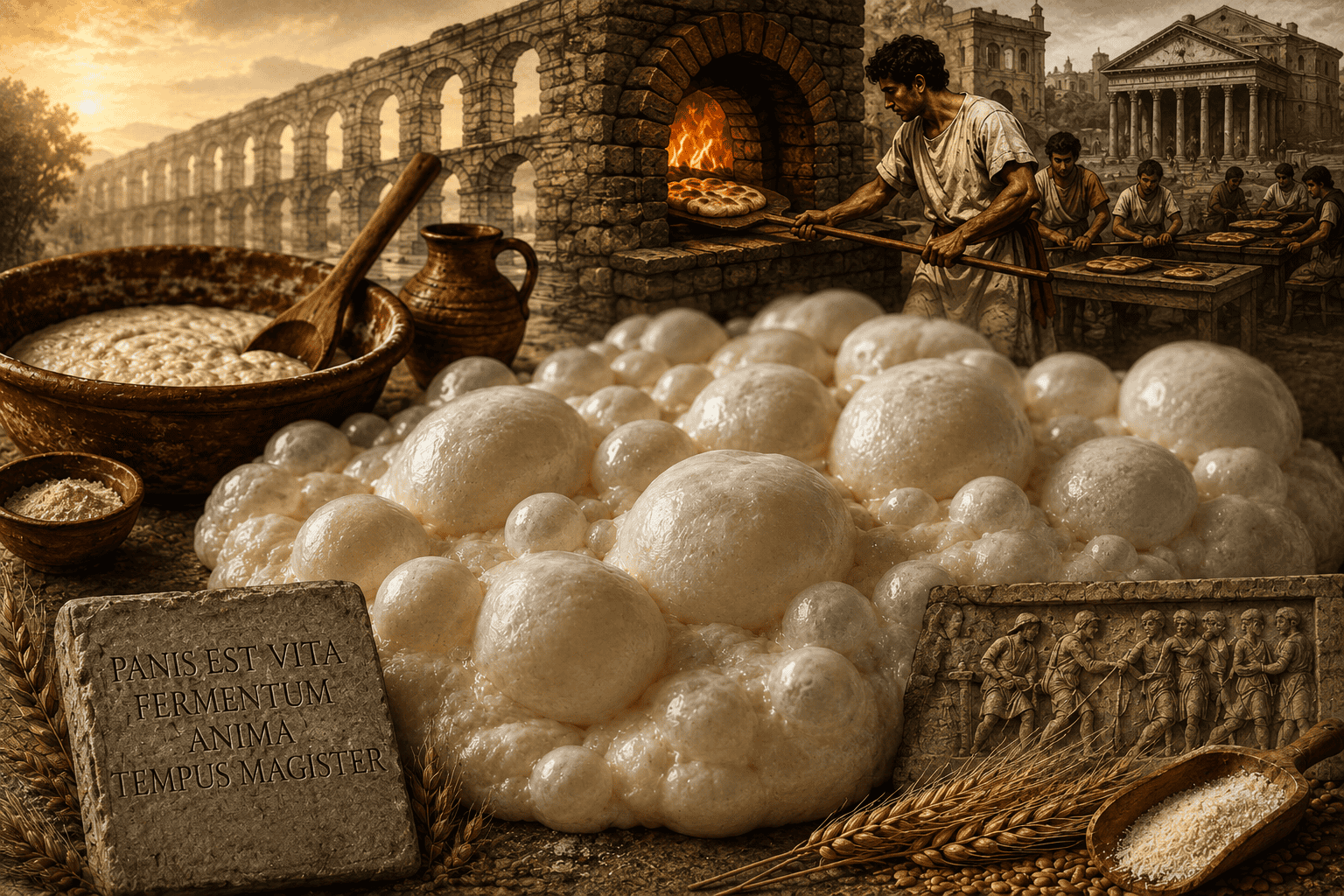
Our pinsa dough is four ingredients: flour, water, yeast, sea salt. No oil, no sugar, no dough conditioners, no improvers. Then it rests, cold, at 4–6°C, for seventy-two hours before anyone touches it.
What the cold does Fermentation slows almost to a stop. Long fermentation changes the structure of the dough. Many people find it sits lighter than a same-day crust. That is a difference in texture and digestibility, not a reduction in gluten.
What that produces Flavour that short-fermented dough cannot develop — nutty, faintly sour, complex. And a structure that’s open and airy inside with an edge that shatters.
Why it’s easier to eat Much of the work your stomach would have done has already happened in the fridge. People who feel leaden after pizza usually don’t after pinsa. It isn’t magic. We just did the waiting for you.
The dough runs at 85% hydration — close to twice the water of a standard pizza dough. That’s what creates the open honeycomb crumb, and it’s why the dough is genuinely difficult to handle. Wet dough is a skill. It’s also the reason most kitchens don’t bother.
Three days in refrigeration for something that bakes in about three minutes. That ratio is the entire philosophy.
The Flour Comes From the Man Who Invented Pinsa
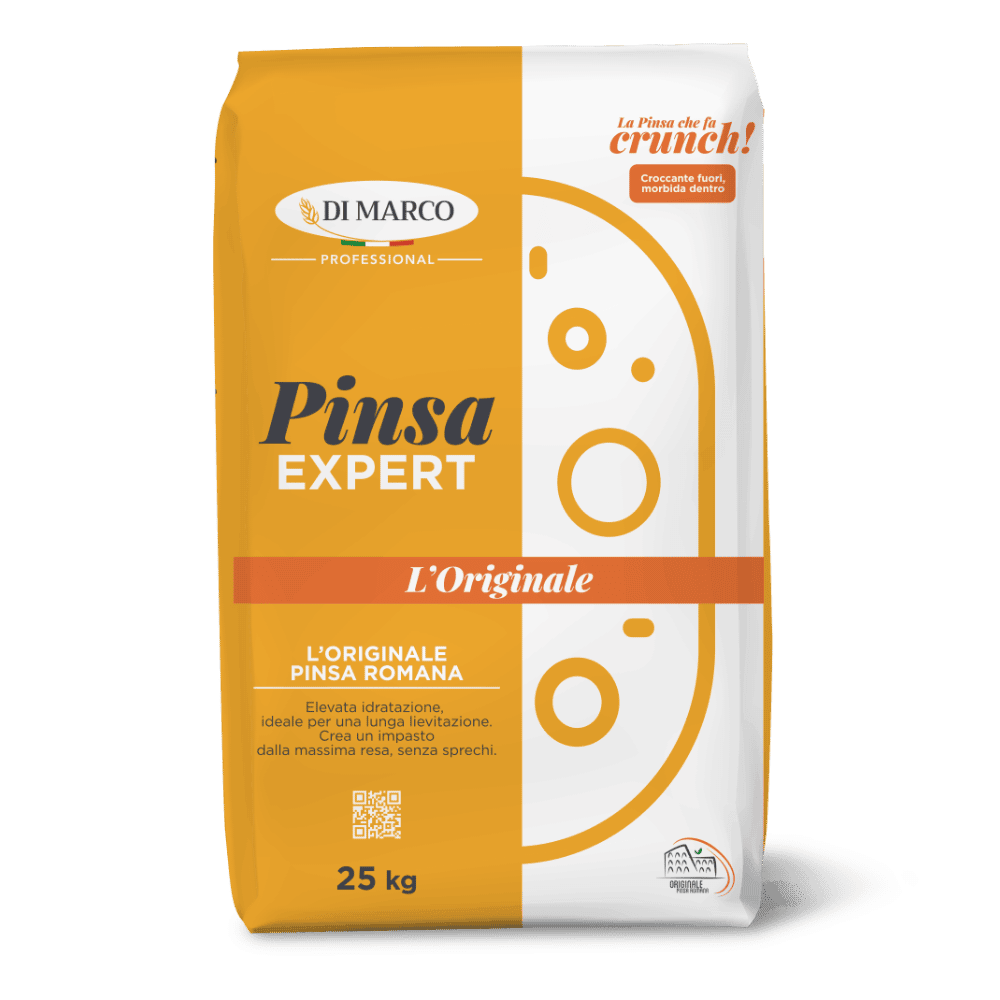
Pinsa romana was created in 2001 by Corrado Di Marco, who set out to rebuild the old Roman flatbreads properly rather than to invent something new. His blend of wheat, rice and soy flours is what makes pinsa pinsa.
We buy our flour from Di Marco. Not a copy of the blend, not an American approximation — the original, from the company he founded.
We could source cheaper flour and still call the result pinsa. Most places would. But the blend is the dish, and there is no version of doing this properly that starts with a substitute.
Our other Italian goods come in through Sogno Toscano, a specialty importer, so that what reaches the kitchen is what the recipe actually asks for. Our pasta is made fresh in Italy and imported — we don’t pretend to extrude better pasta in Arizona than the people who have been doing it for generations.
Produce is another matter. Greens and fruit we source fresh and organic locally wherever we can get them, because the shortest journey wins on anything that lives.
In May 2025 the Lazio region entered pinsa romana in its official register of Traditional Agri-Food Products. The recipe is twenty-four years old and the recognition is real — which is a better pair of facts than most restaurants can offer about the bread they serve. The full story is here.
Milled in Italy, Certified Non-GMO
Our flour is certified GMO-free, milled in Italy outside Rome, and screened for pesticide residue under European standards. It is not certified organic, and we would rather tell you that than imply otherwise.
We don’t import because a European label is automatically superior. We import because the specific flours a Roman pinsa needs are milled the way they’re milled in Italy, and substituting them changes the bread into something else.
Nutritional Declaration Per 100g of Product
Energy
1414 kJ / 338 kcal
Fats
1.2 g
Of which saturates
0.3 g
Carbohydrate
65.0 g
Of which sugars
0.6 g
Fibre
2.0 g
Protein
16.2 g
Salt
0.017 g
Blend of pizza flours for professional use.
Ingredients: Type “0” wheat flour – Rice flour – Soy flour – Dried wheat sourdough – Flavouring agents. May contain traces of mustard.
Stone, Gas, and Three Minutes
No wood-fired oven here, and that’s deliberate rather than a compromise.
Neapolitan pizza wants ferocious heat — 450°C and up, sixty to ninety seconds, which is exactly what a wood oven is built to deliver. Pinsa doesn’t. Pinsa wants a lower, steadier bake on stone, around 320°C, long enough to drive moisture out of a very wet dough without scorching the outside before the inside is done.
So we bake on stone, over gas — heat we can hold exactly where the dough needs it, every single time, from the first order at 11am to the last one at night. Consistency is not a lesser virtue than romance. For this dough, it’s the whole job.
What We Serve
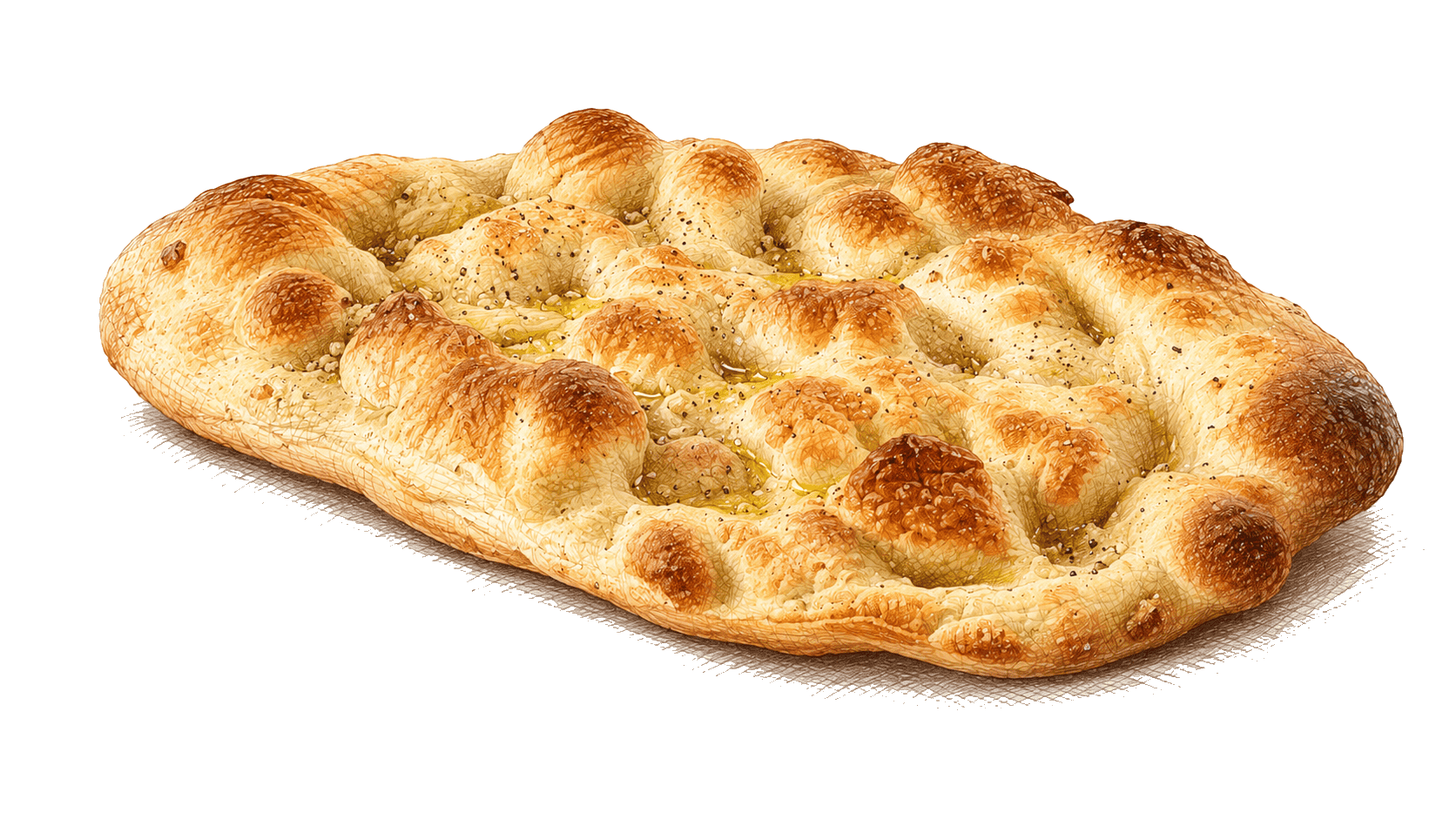
La Pinsa Romana Ten varieties, from the plain Margherita to the Rucola e Prosciutto. Oval, not round — the traditional shape, and the one that lets a high-hydration dough bake evenly edge to edge.
Antipasti & Insalate Bruschetta Capri. Burrata Caprese. Salads on organic leaves with fruit and toasted nuts. An Italian starter is meant to wake your appetite, not blunt it.
Sorrisi Farciti Sandwiches built on the same 72-hour dough, filled and folded. Lunch that doesn’t sit on you for the rest of the afternoon.
Piatti Caldi Entrées and hot plates. Cacciatore, Manicotti Pera Formaggi, Lasagna al Forno, Sausage & Peppers — baked to order, with pasta imported fresh from Italy. Weeknight food in Rome, cooked properly.
Dolcezze Tiramisù and the rest. Have the espresso with it, not after it — Nonna Maria was firm about that.
First time here? Have the Pinsa Romana. Not because it’s our most expensive plate, but because it’s the clearest statement of what we believe. Classic flavour, contemporary craft, three days of patience. If you understand our pinsa, you understand our kitchen.
Long fermentation changes dough. It doesn’t perform miracles, and we won’t pretend otherwise.
What we will claim: lighter, made from four ingredients you can pronounce, and a bread that sits easier afterward than most. That’s enough. It doesn’t need to be more than it is.
Our pinsa is not gluten-free, and it is not safe for people with celiac disease. It is built on wheat flour. The 72-hour ferment changes the dough’s structure, and many people say it sits easier — but the wheat is still wheat, and it does not come close to the 20 ppm threshold required to call food gluten-free. If you have celiac disease or a wheat allergy, please tell your server. We’ll tell you honestly what is safe for you and what isn’t.
Come Eat With Us
Lunch and dinner, seven days a week, from 11am. No reservation needed for lunch. We’re on 89A in West Sedona.
If this sounds like the kind of cooking you’ve been looking for in Arizona, come in and let us feed you.