Espresso, Wine, Amaro and Cocktails
Nonna Pina taught this family the kitchen. Nonna Maria taught the bar.
This page is Nonna Maria’s half.
In post-war Torino she and Nonno Edo ran the Moca Bar on Via Madama Cristina, pouring Miscela d’Oro for people standing at the counter. Matteo spent his first six years underfoot in that bar, too small to drink any of it. Everything below comes from there.
Espresso
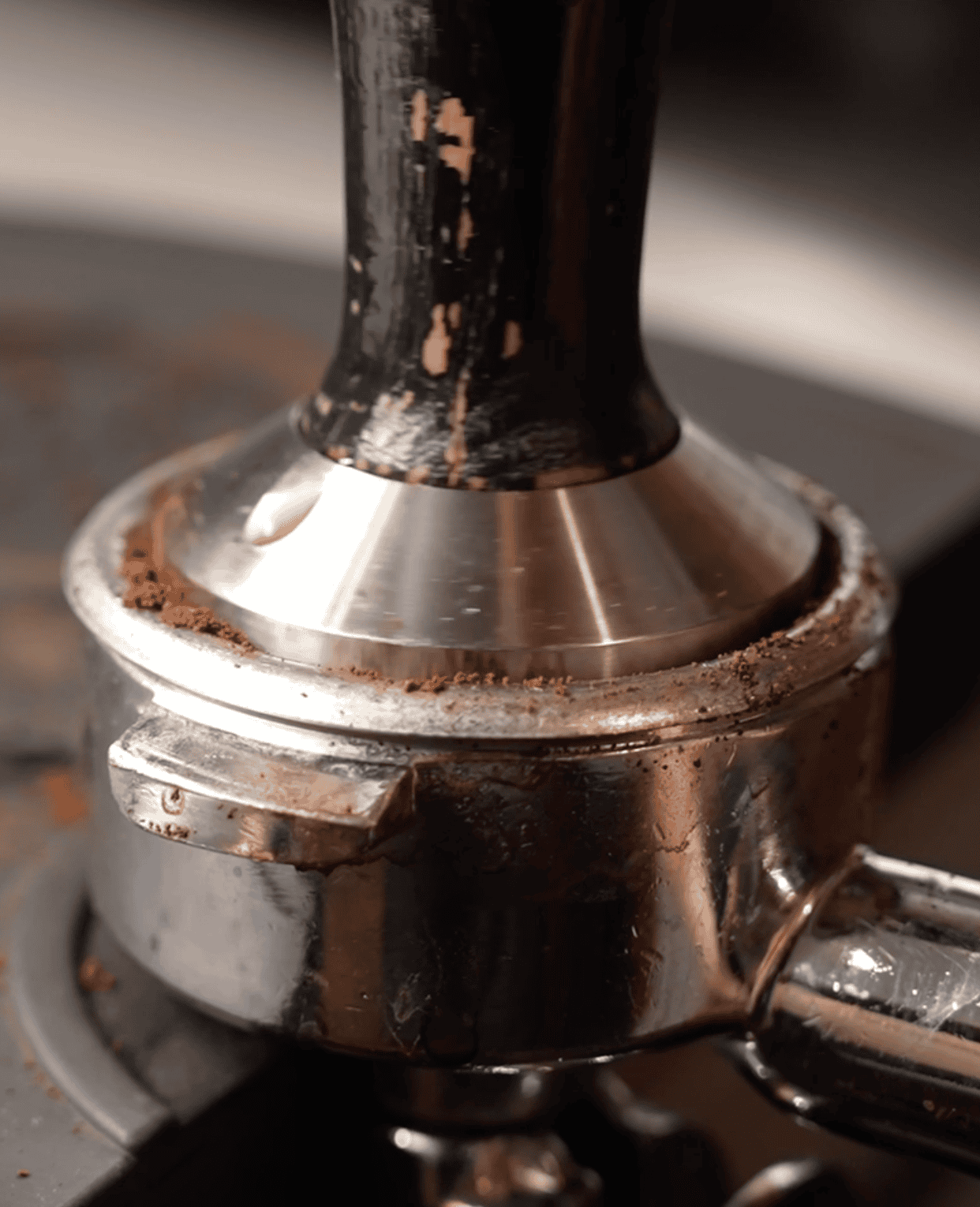
In Italy espresso takes about twenty seconds, standing at the bar. It was never designed to accompany a commute. It was designed to interrupt one.
So it comes to you in porcelain or glass, on a saucer, at the counter — not in a paper cup, not with a lid, not to the car. It is the one rule we don’t bend, and we are glad to tell you why. Read about our twenty-second espresso ritual.
What’s in the cup
Miscela d’Oro Espresso Natura, from a roaster founded in Messina, Sicily in 1946. The beans come from Central America, South America and Asia; the roasting is Sicilian. It is a certified organic blend, and the certification is printed on the bag: the EU organic leaf, control body Bioagricert, code IT-BIO-007.
We mention the code because anyone can say organic, and we would rather you could check.
What to order
Corto, the single. Lungo, the double. Macchiato under a thick spoon of foam. Caffè latte for a long morning. Americano, hot — or over ice, when Sedona is doing what Sedona does in July.
Cappuccino and a cornetto is the correct Italian breakfast and an incorrect Italian afternoon. Milk after a meal is a small crime at home. At two o’clock, after eight miles of red rock, we will not be the ones to report you.
Two of ours
The Marocchino. Espresso, Nocciolata, milk foam and cocoa powder, in a small glass. The Nocciolata is Rigoni di Asiago’s — USDA Organic, palm oil free, made in Italy. Order it next to the Nocciole e Fragole and you’ll understand why both exist.
The Shakerato. A double shot shaken hard with ice and maple syrup until it turns silky, then strained into a chilled glass. It has quietly become the hiker’s drink: the lift of an espresso without the heat of one.


Amaro
Amaro is how an Italian meal ends. Herbal, a little sweet, a little bitter, poured small while nobody is in a hurry to leave.
We keep a proper range: Montenegro, Averna, Braulio, Nonino. Italians will tell you an amaro settles a big dinner. We won’t make any claims for it — we will just say the meal isn’t finished without one, and leave the rest to you.
The Story Behind Our Selection
The wine list is short on purpose. We are not trying to impress a sommelier. We are trying to put the right glass beside a plate of food that already knows what it is.
A bold Cabernet next to the Lasagna al Forno. A crisp Pinot Grigio to reset the palate after a salad. A rosé with the Fragole e Spinaci. From Tuscany, Chianti Ruffino and Brunello di Montalcino, because that is where this conversation usually starts.
Ask whoever is working. They taste these alongside the food, and they will tell you what actually goes.


Aperitivo and cocktails
Before the meal, not after. Aperol Spritz, Campari soda, and Italian sodas with nothing in them at all — aperitivo was always about the hour, not the alcohol.
Behind those: Negroni, Rye Manhattan, Old Fashioned, built properly and without ceremony. The Chaco Flaco cocktails are our Arizona half — Prickly Pear Paloma, Mango Margarita, Strawberry Daiquiri. Moonsail Gin Fizz and the Ranger Buck when you want something longer.
Mocktails get the same attention as everything with alcohol in it. Nobody at this table should be handed a glass of nothing.
One local note: Arizona liquor law keeps wine and cocktails at the indoor tables. The espresso will go anywhere you like — except into a paper cup.
Two grandmothers, two disciplines, one counter. Pina’s half is on the menu. This is Maria’s.